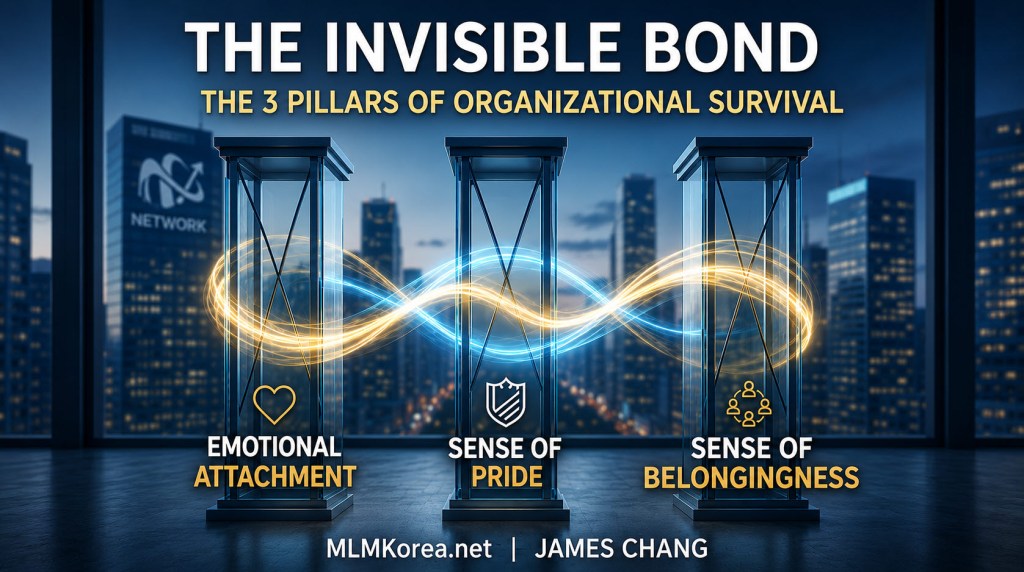
SERIES: THE INDIVIDUAL BOND: THE 3 PILLARS OF ORGANIZATIONAL SURVIVAL
Part 1. Emotional Attachment: Why “Heart” Precedes “Logic” in Korea
Most leaders believe that a superior compensation plan and high-quality products are enough to ensure organizational stability. This is a dangerous myth. In the high-stakes environment of the South Korean market, logic and numbers are easily replaceable. If your partners are only connected to you through a spreadsheet, they will leave as soon as a “better” number appears elsewhere. To build a fortress that survives market volatility, you must master the art of Emotional Attachment.
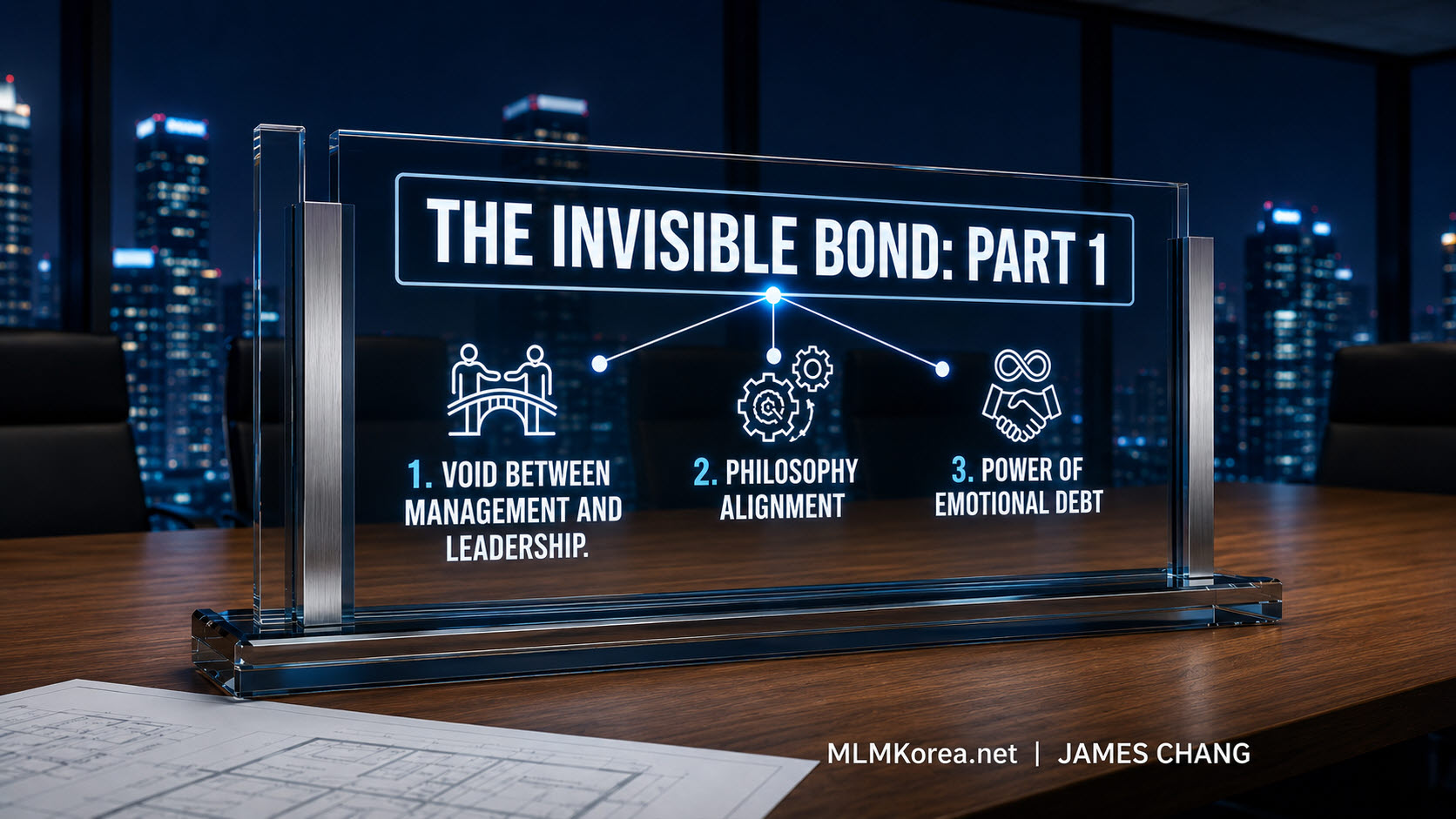
1. The Void Between Management and Leadership
There is a profound difference between managing a sales force and leading a movement. Management focuses on PV, recruitment spikes, and rank advancements – data points that are cold and transactional. Leadership, however, addresses the emotional void. In a hyper-competitive society, people are starved for genuine recognition and a sense of belonging. If you do not know the “why” that keeps your partner awake at night, you are not leading them; you are merely supervising their activity. Without emotional attachment, isolation sets in, and isolation is the primary driver of attrition.
2. Philosophy Alignment as a Strategic Bridge
Emotional attachment is not just about personal rapport; it is about shared conviction. When you align a partner’s individual goals with the core philosophy of the company, you transform their work from a job into a mission. This alignment acts as a strategic bridge that connects their personal values to the organization’s vision. When a partner feels that the company’s success is a reflection of their own integrity and beliefs, their loyalty transcends financial incentives. They are no longer just building a business; they are upholding a philosophy.
3. The Power of Emotional Debt
In the Korean business context, the concept of mutual obligation is a powerful force. The most resilient organizations are those where partners feel a sense of “Emotional Debt” toward their leader. This is not about manipulation; it is about the law of reciprocity. When a leader invests genuine mentorship, time, and emotional energy into a partner’s growth, it creates a bond that is far stronger than any contract. In times of crisis, partners stay not because of the payout, but because the cost of breaking that human connection is too high. Emotional debt is the invisible glue that turns a group of individuals into a legacy.
A Thought for the Leader
I challenge you to look at your leadership style today. Are you a cold analyst of data, or a warm architect of human connection? A business without a heart is a business without a future. While this is true globally, it is an absolute necessity within the unique cultural fabric of Korea, where personal bonds often outweigh contractual ones. Ensure your partners see their own values reflected in our shared mission. Making a place for yourself in their life and their belief system is the most vital “intentional motion” you can take today. Move forward with heart, and the growth will follow.

