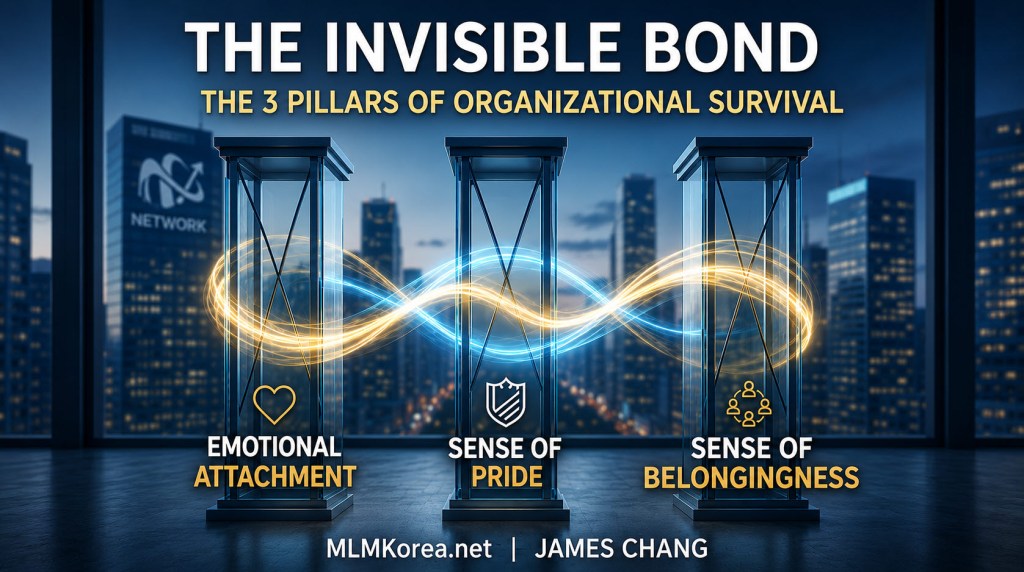
SERIES: THE INDIVIDUAL BOND: THE 3 PILLARS OF ORGANIZATIONAL SURVIVAL
PART 3. Sense of Belongingness: The Invisible Shield Against Market Attrition
Why do highly motivated teams in South Korea suddenly fracture after a strong launch? Many leaders look at the surface and blame compensation plans, a lack of leadership, or sudden shifts in corporate strategy. While these factors matter, the root cause is often far more surprising: a failure to understand the cultural fabric of the market. In a highly collaborative society, financial incentives are never enough to sustain loyalty. If a partner feels isolated, the unique social pressures and lingering prejudices within the Korean market will erode their confidence. True retention requires an unshakeable sense of belongingness.
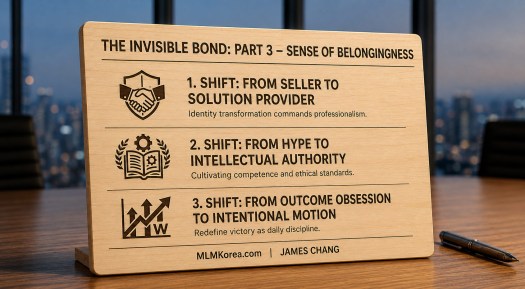
1. The Power of “Uri” (우리) Culture
In South Korea, professional and personal identity is deeply intertwined with collective connection. This is rooted in the concept of “Uri”—a deep emotional bond that translates to a fierce sense of “we” or “our” community. When a new partner faces heavy prejudice from their immediate social circle, navigating that friction alone is fatal. However, when they possess a strong “Uri” connection, this sense of belongingness becomes a powerful shield. External skepticism loses its power when the individual is anchored in a community that validates their path.
2. Establishing Psychological Security Over Fluff
High-caliber professionals do not stay where they only feel tolerated; they stay where they feel protected. True belongingness means creating an organizational culture where competence and ethical compliance are celebrated, and where business setbacks are treated as collective data points rather than personal failures. When your organization prioritizes mutual protection over empty, superficial hype, partners develop real emotional resilience, fundamentally changing how they carry themselves during high-stakes presentations.
3. Anchoring Purpose Through Shared Motion
Belongingness reaches its highest maturity when individual goals align seamlessly with the organization’s grander mission. When a team shares a unified standard of daily discipline, consistency ceases to be a lonely chore and becomes a shared cultural norm. Individual anxiety fades when it is replaced by a collective momentum. In a fast-paced market, an organization moving with shared intention remains completely unshakeable by temporary market volatility.
A Thought for the Leader
True leadership is not measured by how many people you recruit, but by how many people feel safe enough to stay and grow under your vision. I invite you to audit your current onboarding and community structures. Do your partners feel the weight of isolation, or do they feel the strength of a collective shield within their first ninety days?
Ensure that every individual is deeply rooted in your core philosophy and feels an undeniable sense of place. When a partner knows they truly belong, their internal commitment transforms into a winning posture. Success is intentional motion. Win the day with consistent effort and move forward with intentional actions. Success always follows those who build a community of dignity.

