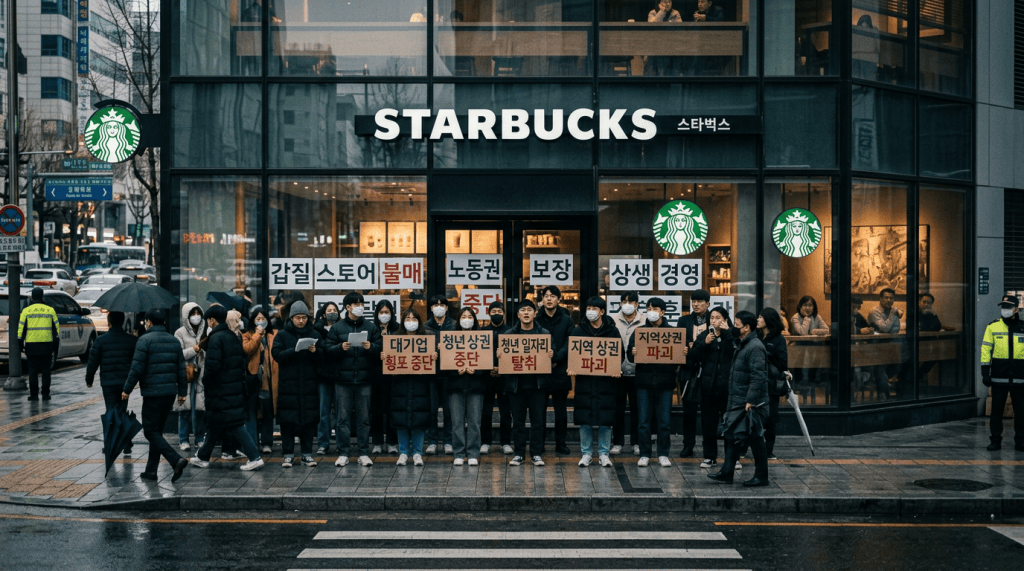
Can a single marketing campaign destroy years of hard-earned trust overnight? The recent crisis enveloping Starbucks Korea proves that it can. By launching an insensitive “Tank Day” promotion on May 18th—a deeply painful historical date of democratization in Korea—the corporate headquarters completely misread the cultural landscape. The fallout was instantaneous: nationwide boycotts, public condemnation from the highest levels of government, and the immediate termination of their CEO. (Korea JoongAng Daily)
For network marketing professionals, this is not just a corporate retail blunder. It is a stark warning about the fragility of organizational culture. In our industry, your network is entirely built on voluntary alignment and collective trust. If your leadership culture loses touch with the values, history, and sentiments of your people, your organization will fracture just as rapidly.
1. The Breakdown of Institutional Governance
The Starbucks crisis occurred because there was a fundamental disconnect between executive leadership, localized internal screening, and the ultimate public output. When the leadership’s private biases or operational negligence override collective sensitivity, disaster follows.
In network marketing, governance is your duplicable system. If top-tier leadership creates training materials, strategies, or promotion mechanisms that are out of touch with the field’s ethical standards or reality, the system breaks. Success is intentional motion. Every operational policy, every recognition event, and every corporate message must be intentionally vetted to ensure it builds trust, rather than alienating the very people moving the business forward.
2. Frontline Partners Bear the Weight of Leadership Mistakes
One of the most telling developments of the Starbucks situation was the company’s hurried second apology, pleading with the public not to abuse frontline baristas who had absolutely nothing to do with the corporate decision.
In your network, your newest distributors are your frontline baristas. When top leadership makes unethical choices, pushes non-compliant product claims, or fosters a toxic “win-at-all-costs” culture, it is the new builders who suffer the consequences in the living room meetings and public spaces. As an executive-level mentor, your highest duty is to protect those who trust your guidance. Winning the day with consistent effort requires that leadership provides a safe, honorable environment for the field to execute. (Seoul Economic Daily)
3. Culture is Currency: Guard It Intentionally
Starbucks was considered an immovable giant in Korea’s “coffee republic,” yet a singular cultural blind spot jeopardized its multi-billion won equity. Network marketing organizations are even more vulnerable because they lack the physical assets of retail giants; your only asset is the psychological contract between leaders and partners.
Never assume your organization is too big to fail. Cultivate a culture of feedback. Surround yourself with leaders who possess the courage to tell you when a strategy is misaligned with the community’s values. Move forward with intentional actions by embedding humility, social awareness, and deep empathy into your daily operations.
A Thought for the Leader
Trust takes a decade to build, a day to break, and a lifetime to repair. Never let corporate arrogance or operational isolation blind you to the heartbeat of your organization. Look closely at your team culture today: Are you building on solid ground, or are you one tone-deaf decision away from an organizational fracture? Act intentionally, protect your frontline, and honor the collective story of your people.

